The Self-Efficacy Shift: Why Your "Ability to Cope" is the Key to Calming Anxiety

True self-efficacy isn't about avoiding challenges; it's about building the internal capacity to grow and thrive, even in challenging environments and believing you can cope.
Have you ever found yourself thinking:
"I just can’t handle this."
"What if I lose control in that meeting?"
"I'm not strong enough to deal with the fallout".
These thoughts are incredibly pervasive, and they point to the true heart of anxiety. Often, we think anxiety is caused by a dangerous situation. But as researcher Edmund Bourne (2020) suggests, anxiety is actually an outcome of a diminished perceived ability to cope.
In other words: Anxiety isn’t just about how scary the "threat" is; it’s about how much you trust yourself to handle it.
The See-Saw of Self-Efficacy
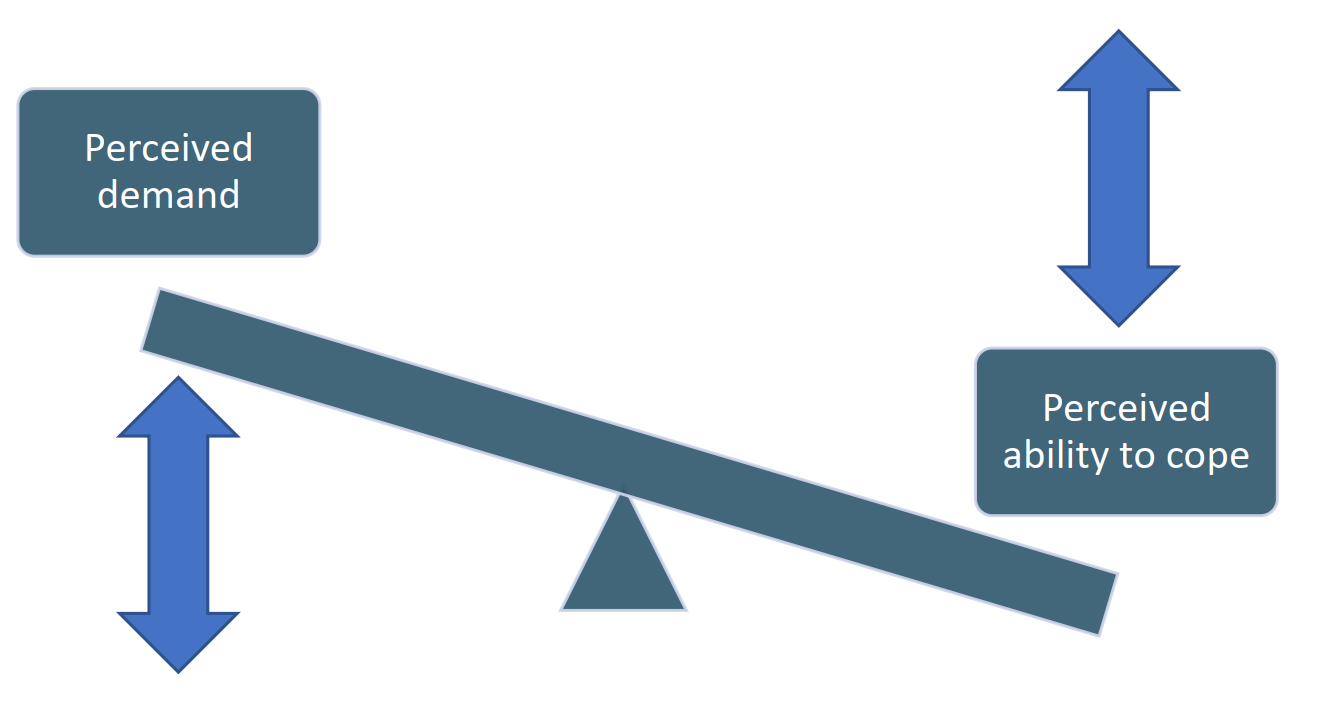
Psychologist Albert Bandura (1977) introduced a concept called Self-Efficacy. Think of it as a see-saw:
On one side are the Demands: The challenges, stressors, and "what ifs" of life.
On the other side is your Self-Efficacy: Your belief in your capacity to manage those challenges.
When our self-efficacy is low, the demands of life feel heavy and overwhelming, causing our anxiety to spike. However, when we increase our self-efficacy, the see-saw tips back. We begin to feel that we can meet those demands.
The vital thing to remember is that this is about your perceived ability, not your actual ability. You have survived every "scary" thing life has thrown at you so far. You have the actual ability. Therapy is about helping your mind believe it.
The Trap of "Safety Behaviours”
When we feel we can’t cope, our natural response is to avoid. We might cancel the appointment, stay quiet in the meeting, or keep ourselves "busy" to distract from the discomfort.
In the short term, these "safety behaviours" make us feel better. But in the long term, they become the very things that keep anxiety alive. They send a message to our brain that says: "The only reason you are safe is because you avoided that situation or feeling". Real freedom comes when we step—even just a little bit—outside our comfort zone. When we experience the thing that makes us nervous and survive it, we send a powerful new message to our system: "I am capable. I can cope".
Uncovering the 'Meaning-Making' Mind
As humans, we have a deep-seated need to make sense of our world. However, anxiety often forces us to view life through a distorted lens. We might look at a missed promotion or a quiet friend and immediately think: 'This proves I’m not good enough', 'I’ll never succeed', or ‘They don’t like me’.
In therapy, we explore these cognitive distortions —the mental filters that Psychiatrist Aaron Beck identified as contributing factors to our distress (Whalley, 2019). We look at the meaning you attach to events and ask: Is this a fact, or is this a feeling? By identifying these unhelpful patterns, we stop letting automatic thoughts and feelings dictate our reality. This shift is a massive boost to self-efficacy; once you realise your thoughts aren't always 'truth', you regain the power to choose a different, more empowered response.
Building Your Resource Toolkit
Building self-efficacy isn't just about "positive thinking"; it’s about building genuine internal resources (Rogers, 1967). Here are several ways we do this in therapy which in turn also give you the tools to build your self-efficacy outside of therapy:
1. Connecting with the "Felt-Sense" Instead of trying to out-run the discomfort, we learn to be mindful of it. By focusing on your somatic (body) sensations without judgment, you become more attuned to your responses. This "mindfulness" reduces the feeling that anxiety is a pervasive, mysterious force and turns it into something manageable (Cornell, 1996).
2. Activating the Relaxation Response We use practical tools like diaphragmatic breathing and body scanning. These aren't just "calming down" exercises; they are ways to prove to yourself that you have the power to influence your own nervous system.
3. Understanding the 'Why and How' (Psycho-education) Often, anxiety feels terrifying because it feels mysterious. By explaining the mechanics of your brain—such as the "Fight, Flight, Freeze" response or the "Self-efficacy"—we take the mystery away. Understanding that your body is working for you (even if it feels uncomfortable) provides immediate relief and reduces that sense of inexplicability (Yalom, 2002).
4. The Power of Hypnosis This is where hypnosis becomes a "superpower" for self-efficacy. Hypnosis allows us to bypass the critical, doubting mind and communicate directly with the unconscious. In this state, we can "rehearse" success and anchor feelings of competence and calm. By teaching yourself hypnosis, you gain a portable tool that increases your self-agency, helping you move from reacting to anxiety to responding with confidence.
Moving from Victim to Agent
As you strengthen your self-efficacy and learn to trust your inner experience, your threshold widens. You become more resilient, more resourceful, and more in tune with your own strengths.
You stop asking, "How do I stop life from being scary?" and start saying, "I trust myself to handle whatever comes".
Ready to tip the see-saw in your favour? If you want to build your internal resources and move towards a more empowered way of living, I am here to help.
Further Reading & References
Bourne, E. (2020) The Anxiety and Phobia Workbook, seventh edition. Oakland, CA: Harbinger.
Bandura, A. (1977) ‘Self-Efficacy: Toward a Unifying Theory of Behavioural Change’. Psychological Review, 84 (2), pp. 191–215. https://doi.org/10.1037/0033-295X.84.2.191
Cornell, A.W. (1996) The Power of Focusing: A Practical Guide to Self-Healing. Oakland: New Harbinger.
Rogers, C. (1967) On Becoming a Person: A Therapist’s View of Psychotherapy, sixtieth edition. London: Robinson.
Whalley, M. G. (2019) Unhelpful Thinking Styles: Cognitive Distortions in CBT. Psychology ToolSs. Available from: https://www.psychologytools.com/articles/unhelpful-thinking-styles-cognitive-distortions-in-cbt/ [Accessed 07/05/2026].
Yalom, I. (2002) The Gift of Therapy: An Open Letter to a New Generation of Therapists and Their Patients. London: Piatkus.
